Fiji Hotel and Tourism Association, 16 July 2026 – Now and then, an issue sits quietly in the background while the louder national conversations take over.
In the past few weeks, understandably, much of Fiji’s public attention has been on the National Budget, the cost of doing business, infrastructure needs, public spending, taxation, aviation, investment and growth. These are important issues, and tourism has a direct stake in all of them.
But as we look ahead to World Mangrove Day on 26 July, I believe it is also time to bring mangroves back into the national conversation.
Not as a side issue. Not as an environmental talking point that only matters to technical officers, conservation groups or coastal communities. But as part of Fiji’s national resilience, tourism future and long-term development planning.
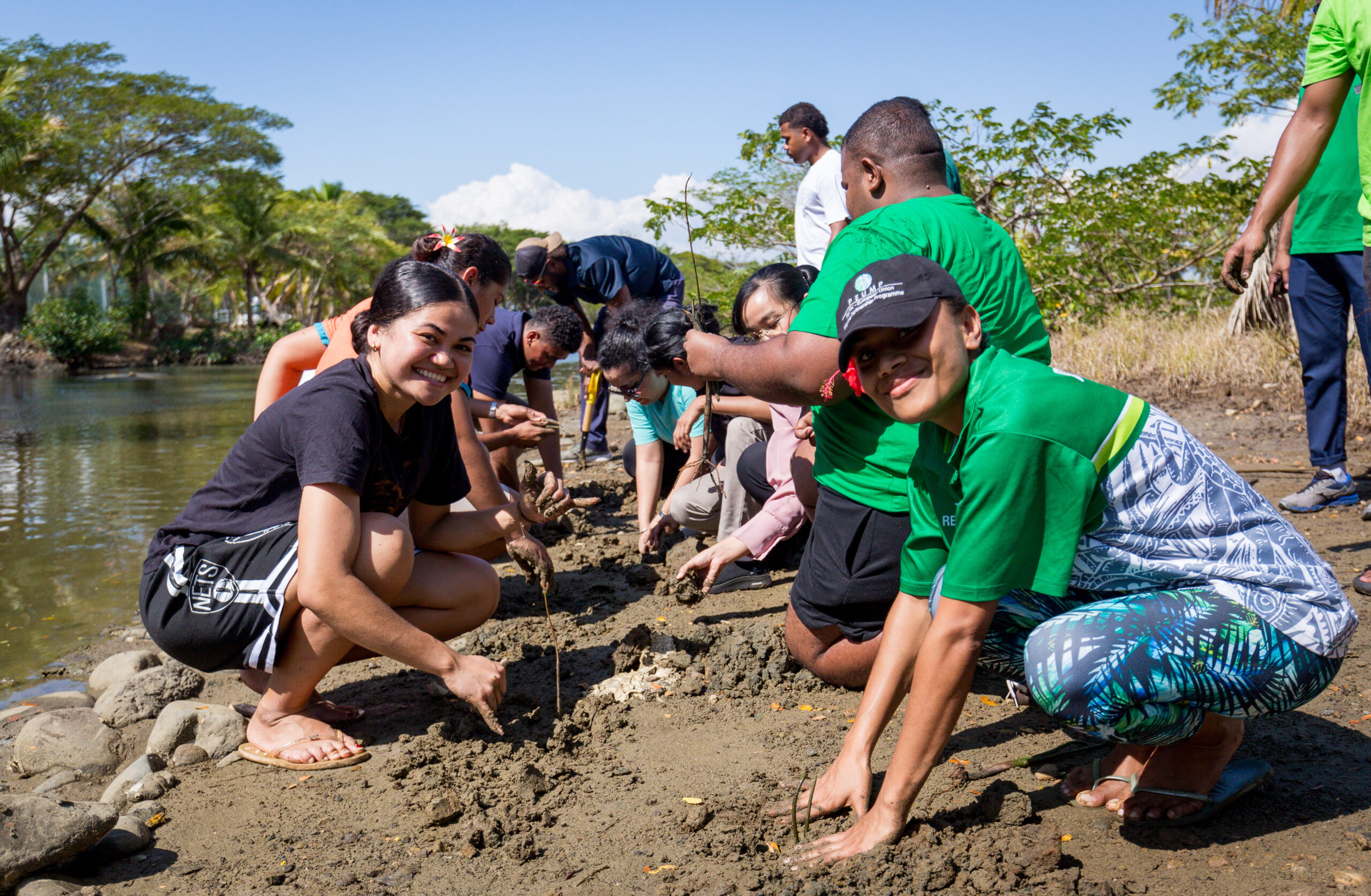
We are part of the Mangrove Restoration Working Group that brings together government agencies, technical partners, civil society organisations and other stakeholders working through the practical details of national mangrove restoration.
Development – most often tourism – has been the primary driver behind the removal of mangroves, cleared to make way for resorts and other commercial infrastructure. Yet despite the critical ecological role mangroves play in coastal protection, biodiversity, and climate resilience, not enough is being done to ensure they are replaced or restored. While today’s custodians of the environment may be making better efforts, historically there has been poor oversight and weak enforcement of regulations. This has allowed unchecked destruction to continue, leaving gaps in coastal defences and undermining Fiji’s long-term sustainability.
We have recognised that stronger policy reforms, backed by consistent monitoring and enforcement, are urgently needed to reverse this legacy of neglect and ensure that mangrove ecosystems are not sacrificed for short-term economic gain. And we have called for these reforms, committed to supporting efforts to bring them about and take part in the forums that address these. The role and key focus of the Working Group is on mangrove restoration. Mangrove protection is dealt with through the Mangrove Management Committee, although the two areas naturally overlap. Restoration cannot be separated from protection, just as coastal resilience cannot be separated from land use planning, development approvals, community access, fisheries, tourism and climate adaptation.
That is where tourism has a very real interest.
Fiji’s tourism industry is built around our natural environment. That might sound obvious, but it is worth repeating because we sometimes discuss tourism only in terms of rooms, arrivals, air seats, taxes and investment values. Those are obviously important. But our real product is still the environment and its many facets that anchor our branding and marketing and ultimately are the foundation of the visitor experience.
From coastlines to highland ridges, our reefs, beaches, forests, rivers, culture, communities and marine ecosystems are what makes Fiji so diverse and special.
Mangroves are part of that foundation.
They protect shorelines, reduce wave energy, stabilise sediment, support fisheries, store carbon, provide habitat for marine and bird life, and help buffer coastal communities against flooding and storm surge. In tourism areas, they may sit beside villages, resorts, jetties, coastal roads, dive operations, kayaking routes, fishing grounds and community-based tourism sites.
Mangroves are not simply trees growing in mud. They are living infrastructure – natural seawalls, nurseries for marine life, and carbon sinks – that remain under-appreciated and consistently under-estimated in their true worth. Treating them as expendable vegetation ignores the fact that they are vital assets for coastal protection, biodiversity, and climate resilience.
With Fiji actively pushing for more tourism investment and Government clear about the need for more rooms, more investment, more connectivity and stronger economic returns from the sector, we must ensure we’re aware of the natural destruction these efforts might also bring about. We understand the ambition, but growth must be matched with concern for environmental protection and resilience.
If we are pushing for more tourism infrastructure in coastal areas, then the natural systems that protect those areas must also be given priority. We cannot speak seriously about increasing accommodation capacity, expanding tourism zones and strengthening investor confidence while leaving coastal resilience, mangrove restoration and regulatory clarity fading slowly into the background.
For tourism operators, the practical issues are familiar. Coastal erosion affects beaches and access. Poor drainage affects properties, roads and nearby communities. Storm surges – a climate phenomenon that has increased in frequency over the last decade – affect safety and operations. Damaged reefs and mangroves affect fisheries, marine biodiversity and the visitor experience. Unclear rules affect whether an operator can maintain existing access, restore a degraded area, support community planting, repair drainage, build a boardwalk, or respond after a weather event.
This is where clarity on regulations matters.
One of the persistent frustrations raised around the national mangrove programme is that the regulations governing mangrove protection have still not been finalised or passed. Partners across agencies have indicated that this has been pending for several years. This delay is disappointing because the message this sends is that this is unimportant in the grand scheme of things, while the absence of a clear and finalised regulatory framework makes everyone’s work harder. Without it, enforcement remains inconsistent, restoration efforts lack certainty, and stakeholders are left navigating a patchwork of unclear obligations. Finalising these regulations is therefore not just a bureaucratic step; it is essential to give coherence, authority, and momentum to the collective work of safeguarding mangroves.
Even something as basic as a working definition of mangroves matters. It determines how areas are mapped, how restoration sites are selected, what species are prioritised, what activities are allowed, what requires approval, and how different agencies interpret their roles.
The Working Group is trying to progress important technical work, including restoration priorities, baseline mapping, species guidance, site-selection criteria, data standards and wider national coordination. But that work needs a firm policy and regulatory foundation. Without it, agencies, communities, NGOs and the private sector are all trying to move in the right direction while still waiting for the rules of the roadmap to be properly marked.
Completing this should not be a complicated request. We would like to see the relevant mangrove regulations progressed with urgency, and we would like the final framework to be clear, practical and usable because this will obviously provide the guidelines for how the industry approaches their individual efforts in this area.
It should clarify what is protected, which agency leads on which matter, when the Environment Management Act and EIA process apply, how forestry-related provisions interact with development activity, and what operators, communities and landowners are required to do before undertaking works near mangroves. As opposed to the current working environment, where everyone does what they think is right and then deals with the consequences of an agency disagreeing, development or protection programs getting halted, and the usual exchange of follow-ups continues for months if not years.
It should also distinguish between very different types of activity. Clearing mangroves for reclamation is not the same as maintaining an existing drainage outlet. Building new infrastructure is not the same as restoring a degraded mangrove edge.
Emergency and clearance work after flooding are not the same as planned development. Community access, traditional use, tourism access, navigation and conservation management all need to be understood properly and guided clearly.
Without that clarity, well-intentioned people hesitate, responsible operators wait, communities become uncertain, and poor decisions can still slip through because the system is not as clear as it should be.
The tourism industry has a critical role to play in this conversation.
Operators often see coastal changes early. They know where erosion is worsening, where drainage is failing, where sediment build-up is causing challenges for accessibility, where guests can no longer safely access a beach, where jetties are exposed, where mangroves are recovering, where they are being damaged, and where community use and tourism activity overlap. That site-level knowledge can help inform national mapping and restoration priorities.
Tourism also has a strong interest in nature-based solutions. The draft national approach to coastal protection recognises that seawalls should not be treated as the only answer. In some places, hard engineering may be necessary. In others, nature based or hybrid approaches, including mangrove restoration, reef protection, dune restoration, vetiver planting and better land-use planning, may deliver stronger long term outcomes.
That distinction matters. A wall that protects one small strip of land but worsens erosion next door, damages beach amenity, traps floodwater or cuts off access is not a holistic solution. It may simply move the problem further down the road. Good coastal protection must look at the whole system.
For Fiji, that system includes communities, customary rights, public infrastructure, private investment, cultural values, marine ecosystems and the visitor economy.
The Working Group’s work may sound technical from the outside, with discussions around definitions, mapping, species, restoration criteria, baselines and management responsibilities. But these are the building blocks of better national decision-making, and why we’re so engaged.
World Mangrove Day is celebrated on July 26, and Fiji has an opportunity to make mangroves more visible again with practical national attention, with clearer regulations, stronger coordination and restoration priorities that recognise ecological, community and economic value. We need tourism included early where coastal protection, access, drainage and infrastructure decisions affect tourism areas. We need to treat mangroves as part of the country’s resilience infrastructure.
And we need to do this now, while Fiji is still shaping the next phase of tourism growth.
Fantasha Lockington – CEO, FHTA (Published in the Fiji Times on 16 July 2026)

Fiji Hotel and Tourism Association
The Voice of the Industry