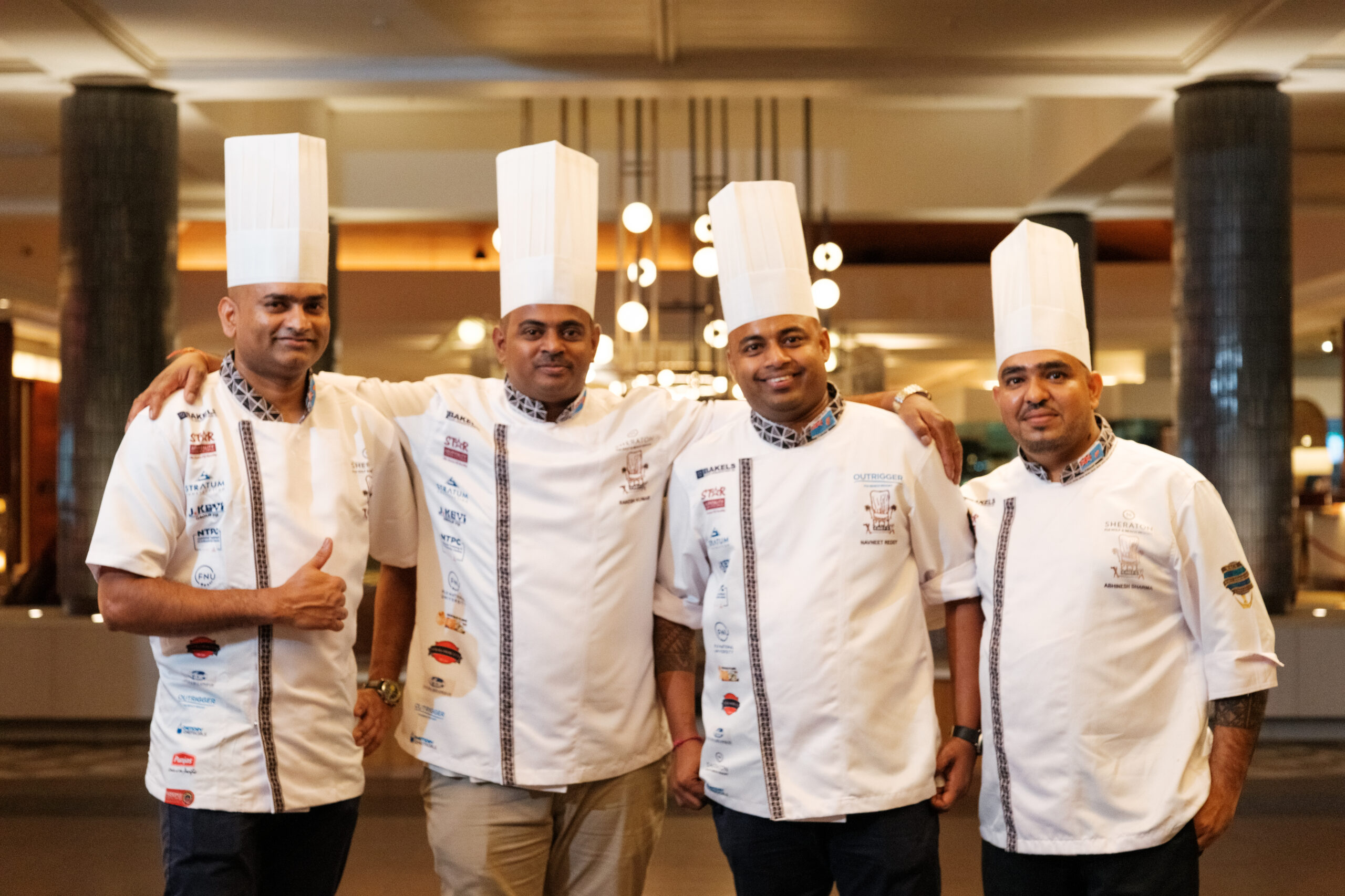
The Sheraton Fiji Golf & Beach Resort has positioned itself at the centre of Fiji’s culinary rise, hosting and backing the country’s top chefs as they prepare for international competition at the highest level.
On Saturday, 25 April 2026, the resort’s Golden Ballroom set the stage for the inaugural Feast Fiji – Eight Hands Dinner, bringing together four of the nation’s leading culinary talents in a single, collaborative showcase. The event was more than a one-night dining experience. It was a deliberate show of industry support behind Team Fiji as they prepare to compete at the Global Chefs Challenge Finals in Newport, Wales next month.
At the heart of the evening was Executive Chef Rakesh Kumar of Sheraton Fiji, who also serves as President of the Fiji Chefs Association. Under his leadership, the event was designed to do two things clearly and without compromise: unite Fiji’s top chefs across competing properties, and place them firmly on a pathway to global recognition.
Sheraton Fiji did not simply provide a venue. It acted as convenor, host, and industry anchor. By opening its kitchen to chefs from Outrigger Fiji Beach Resort and Novotel & Mercure, the resort set a tone that is rarely seen in hospitality markets driven by competition. This was collaboration with intent.
More than 150 guests attended the sold-out dinner, experiencing a four-course menu crafted collectively by Chef Kumar, Chef Abinesh Sharma, Chef Navneet Reddy, and Chef Vikash Chetty. Each course reflected not just individual skill, but a shared narrative of Fiji’s produce, culture, and evolving culinary identity.
Chef Kumar opened the evening with an amuse-bouche inspired by the balance of ocean and land. It was a small but deliberate statement, grounded in fresh seafood, tropical flavours, and the clarity of local sourcing. The tone was set early. This was Fiji on a plate, not an imitation of somewhere else.
From there, the menu moved through a progression that leaned heavily into farm-to-table thinking and modern interpretation. Chef Navneet Reddy’s starter brought forward fresh herbs and local ingredients with restraint and confidence, while Chef Vikash Chetty’s main course balanced premium proteins with seasonal produce, executed with a contemporary edge. The evening closed with a refined dessert from Chef Abinesh Sharma, showcasing tropical fruits through a disciplined pastry approach.
What mattered was not just the food, but what sat behind it.
All four chefs are finalists from the Global Chefs Challenge Pacific Rim Regional Semi-Finals, and will represent Fiji at the global finals from 16 to 19 May 2026. The Feast Fiji dinner served as both a showcase and a fundraiser, with proceeds directly supporting their journey to compete on the international stage.
This is where the Sheraton Fiji and broader Marriott positioning becomes clear. The resort is actively investing in talent, not just internally, but across the industry. It is using its platform to elevate chefs beyond its own brand, recognising that Fiji’s global reputation depends on collective strength, not isolated success.
Chef Kumar was direct in his framing of the initiative. The intent is to build a unified culinary identity for Fiji, one that is capable of standing alongside established global food destinations. That requires visibility, investment, and shared effort. It does not happen through individual resorts working in silos.
This approach aligns with a wider shift in how leading hospitality groups are thinking about destination development. Marriott, through properties like Sheraton Fiji, is increasingly positioning itself not just as an operator of hotels, but as a contributor to national tourism value. Culinary tourism sits at the centre of that shift.
For Fiji, this is not theoretical. Food is already a critical part of the visitor experience. What has been missing is consistent elevation, storytelling, and international benchmarking. Events like Feast Fiji begin to close that gap.
The collaboration extended beyond the kitchen. Guests were immersed in a full cultural programme, with performances from Muairi Entertainment and live music from Vegas 6. The intent was clear: to present a complete Fijian experience, where cuisine, culture, and hospitality operate as one.
For the chefs involved, the evening carried weight beyond the immediate event.
Chef Navneet Reddy highlighted the significance of working alongside peers in a unified setting, noting that Sheraton Fiji’s leadership created space for collaboration that benefits the entire industry. Chef Vikash Chetty framed the experience as both humbling and motivating, reinforcing the importance of standing together as representatives of Fiji rather than individual properties.
Chef Abinesh Sharma pointed to the professional value of the experience, emphasising that collaboration at this level sharpens skills, builds networks, and raises standards across the board.
The common thread is straightforward. When given the platform and backing, Fiji’s chefs are capable of delivering at a level that meets international expectations. What they require is sustained support, visibility, and access to opportunities.
That is where the role of major operators becomes critical.
Sheraton Fiji has demonstrated what practical support looks like. It has provided infrastructure, visibility, and leadership. It has aligned its brand with the advancement of local talent. It has made a clear statement that investing in chefs is not optional, but necessary.
The next step is consistency.
One event does not build a culinary reputation. Repetition does. Structured support does. Continued collaboration across properties does. The foundation is now visible. The expectation is that it continues.
As Team Fiji prepares to compete in Wales, they do so with more than individual backing. They carry visible support from within the industry, anchored by a resort willing to lead from the front.
The significance of that should not be understated.
Fiji has long been recognised for its natural assets. What is now emerging, with increasing clarity, is its ability to compete on culinary grounds. That shift does not happen through messaging alone. It happens through execution, investment, and industry alignment.
Feast Fiji was a controlled demonstration of that capability.
Sheraton Fiji ensured it did not remain theoretical.