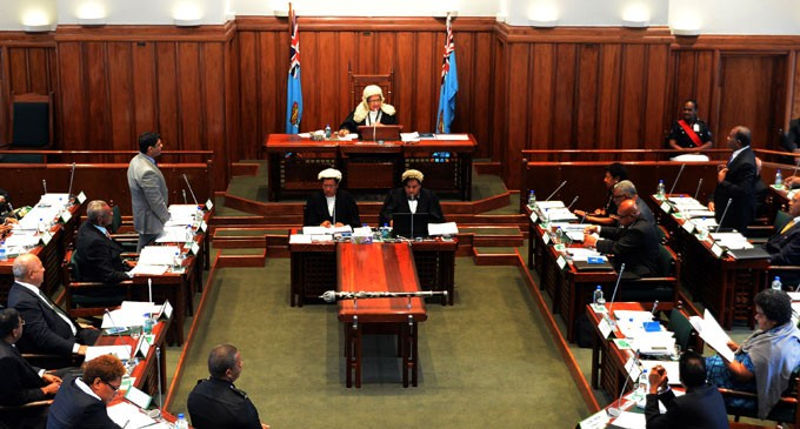
Fiji Hotel and Tourism Association, 20 November 2025 – The Employment Relations (Amendments) Bill No. 27 recently underwent public consultations through the Parliamentary Standing Committee on Economic Affairs. According to government’s parliament website – “Parliamentary committees are small groups of members of Parliament who work together to investigate and consider issues on behalf of Parliament. They meet with people and call for documents to assist them in their work. They usually report their findings to Parliament and can make recommendations for changes to laws and administration. Parliament must officially respond to the recommendations made by Committees”.
Bill No. 27 of 2025 proposes 142 amendments and insertions to Fiji’s labour laws—an overhaul of unprecedented scale. While the intent is to modernize protections for workers and align Fiji with global standards, the sheer breadth of the changes will transform employer–worker relationships.
This Bill introduces criminal liability for employers, instant fines with penalties reaching up to $1million, alongside expanded worker protections with coercive union membership (or pay bargaining fees as non-union members). For a small island economy like Fiji, where SMEs form the backbone of employment and tourism drives national growth, such sweeping reforms have required careful scrutiny and consistent response to the perceived tripartite process that deliberately left out employer voices.
The Parliamentary Standing Committee tasked with reviewing the Bill faces an immense challenge: how to give justice to a document of this magnitude while ensuring balance between worker empowerment and business sustainability. Such breadth means the Bill is not a simple update—it is a fundamental transformation of employer–worker relationships, shifting compliance from civil to criminal liability and embedding new obligations across a range of employment aspects.
From the original matrix of 287 tripartite agreed-to amendments and the 163 clauses that were not agreed to (as confirmed by the Employment Relations Advisory Board or ERAB Minutes of 29th August 2019); the renewed consultations of 2023 were supposed to focus only on the sections that were not agreed to. However, someone decided to rewrite entire sections without the employer partners, enforced by Non-Disclosure Agreements (NDAs) to complete the secrecy of the changes, then proceeded to push the Bill with undue haste through the government approval process, hoping no one would notice. The strange silence from government ministries on the Bill means it has quietly avoided much scrutiny from the largest employer in the country.
The Bill is therefore badly written, fundamentally flawed and shows the complete lack of the consultative and good faith approach the Ministry of Employment has consistently advised it has used.
One of the most striking features of Bill No. 27 is the extent to which it leans toward strengthening union influence. Several provisions—such as those relating to compulsory membership wording, expanded collective bargaining rights, and enhanced dispute resolution powers—shift the balance of labour relations firmly in favour of organized labour.
While unions play a vital role in protecting workers and ensuring fair treatment, the Bill’s framing risks creating an environment where employers are not equal partners but adversaries. This tilt could foster more adversarial relations rather than collaborative problem-solving, undermining the spirit of “good faith” consultation that has been central to Fiji’s employment law since 2007.
For SMEs forming 70% of Fiji’s employer networks that often lack the resources to navigate complex collective bargaining processes; the union-centric nature of the Bill adds another layer of difficulty. It risks discouraging entrepreneurship and innovation, while larger unions gain disproportionate leverage over small employers who are already struggling with compliance costs.
In the broader economic context, foreign investors may view this imbalance as a signal that Fiji’s labour environment prioritizes union power over business sustainability. This perception could weaken investor confidence at a time when Fiji needs capital inflows to diversify its economy and build resilience.
In a fragile economy like Fiji – heavily reliant on imports, a limited private sector and a dwindling accessibility to skilled labour; employers already operate under a heavily regulated framework. Badly written legislation risks creating duplication, confusion, and excessive compliance costs. Additionally, SMEs lacking the resources of large corporations, will be disproportionately burdened. Many may be forced into informality or closure, undermining both worker protections and tax revenue.
Fiji also competes regionally for tourism, manufacturing, and service-sector investment. A punitive labour environment—marked by criminal liability and steep fines—may deter investors who seek predictability and balance. This risks slowing economic diversification and job creation, both critical for Fiji’s resilience in the face of climate and global shocks.
The Standing Committee’s capacity to process 142 amendments—each of which must be read in the context of the full Act (but not provided for general public awareness anywhere), alongside oral and written submissions—cannot realistically allow for deep scrutiny of every provision without further extended consultation. Rushed or superficial review risks enacting reforms that might be well-intentioned but impractical, eroding confidence in Fiji’s legislative process. We say well-intentioned because employers have agreed that the Act, like many of Fiji’s archaic legislations, is outdated and needed reform to bring it into the future of work that Fiji has, and continues to move into.
Employers must be recognised as partners in national development. They support fair treatment of workers and recognize the need for modernization. But they caution that a Bill of this magnitude cannot be rushed or simplified without risking unintended consequences. We have said so before and repeat it here again – bad employers exist and must be taken to task – in the same manner that bad workers also exist, and unions struggle with relevance in a world moving further into automation and advanced technology.
The Employment Relations Act is not the property of the Ministry, whose role is to regulate and provide oversight. Nor does it belong solely to trade unions, whose mandate is to protect and uphold worker rights. Employers are an essential stakeholder in this framework. They are not opposed to reform, but seek a measured, consultative approach that reflects Fiji’s development goals and the realities of a small island economy. Borrowing clauses from New Zealand’s employment law may appear progressive, but it is incomplete if it ignores the corresponding provisions that also ensures parity for employers.
If enacted wholesale without balance, the Bill risks job losses, reduced competitiveness, and weakened SMEs—the very enterprises that sustain communities and drive tourism. It could also discourage foreign investment at a time when Fiji needs capital inflows to build resilience and diversify its economy. And there is no guarantee that the ministry will get its “magic bullet” that allows it to fast track cases to the criminal courts to throw all employers into jail or extract huge fines off them for consistent wage theft and on-going bad treatment of workers generally.
Reform is necessary, but reform without balance is dangerous. We must ensure that worker empowerment goes hand-in-hand with business sustainability, so that both employers and employees can contribute to a stronger, more resilient future. The risk is that businesses will either downsize, pass costs to consumers, or move into informality—undermining both worker protections and national economic goals.
Employers have called for balanced consultations that have been ignored. Engage employers, unions, and sectoral representatives in meaningful dialogue that is attended by third parties that are not only the Ministry of Employment representatives, so that meeting minutes are recorded that truly reflect discussions. Ensure reforms reflect Fiji’s unique economic realities as a small island state, not just international benchmarks that are plucked out of first world country legislations where their governments usually subsidise increased costs to employers.
Frame reforms in a way that demonstrates Fiji’s commitment to fair labour practices and a stable, enabling business environment, through data-verified research showing why the changes are needed. Reforms can be introduced gradually, prioritizing the most urgent worker protections first. A phased implementation should also allow SMEs time to adapt, with clear guidance and capacity-building support.
Safeguards could also tailor compliance requirements to business size and capacity and even provide incentives such as tax breaks or training support so that they could meet new standards without crippling their operations. Because digesting and operationalizing this volume of change is daunting. It requires legal expertise, systems upgrades, and cultural shifts that many businesses simply cannot afford.
The question now remains whether we can position Fiji as a destination where workers are protected and businesses can thrive, reinforcing its reputation as a competitive and responsible investment hub. Or do we take a step backwards, falsely believing we’re moving forward.
Fantasha Lockington – CEO, FHTA (Published in the Fiji Times on 20 November 2025)

Fiji Hotel and Tourism Association
The Voice of the Industry