Fiji Hotel and Tourism Association, 02 July 2026 – Every National Budget tells us something about where the country is at, what Government is worried about, and where the pressure points are likely to fall.
The 2026/2027 National Budget, framed as “responsible” and “sustainable,” is but a reflection of Fiji’s difficult fiscal reality. Public debt remains high, government expenditure is under constant pressure, and fuel price volatility has once again exposed how vulnerable small island economies are to global shocks, with the difficult truth we must face being that as usual Fiji was ill prepared for any shock. Every sector is being asked to do more with less, and the belt-tightening being called for within the public sector is an exercise in futility given there has been no historical practice to provide much needed muscle memory. The measures proposed are too short-sighted—focused on immediate fixes rather than building the resilience, productivity and economic lift Fiji urgently needs.
Once again the industry’s central role in the economy was recognised, with Government noting that tourism contributes around 40 percent to Fiji’s economic activity through employment, foreign exchange earnings, investment, aviation demand, agriculture linkages, transport, retail, construction, cultural industries, marine services and thousands of small businesses whose businesses are tied to visitor confidence.
It was also acknowledged that tourism must be protected because without support, industries do not grow. Noting that we need more rooms, better infrastructure, stronger airport capacity, expanded tourism products and a safe, secure destination experience. We have been saying exactly this for many years, usually while in queues waiting for water connections, caught in traffic due to delayed road repairs, addressing power outages that demand back-up diesel generator usage, pleading with Immigration for recruitment gap relief, and weekly follow ups to regulatory agencies sitting on approvals, permits and licenses.
There are some useful measures provided that include the extension of diesel duty concessions to hotels using diesel for power generation from 1 July to 31 October 2026 that will no doubt provide some relief for properties that rely on backup generation or operate in areas where energy reliability remains a daily operational issue. It will not solve the deeper utility challenge, but it recognises the cost pressure.
Then after 6 years of consistently requesting, we finally saw the amendment to the Time of Supply rule in the VAT act come through.
There’s also the extended support around fuel and energy cost volatility more broadly, including concessions for Energy Fiji Limited and bus operators, and targeted assistance for vulnerable households and very small businesses. These are sensible interventions as fuel shocks do not stay neatly inside one sector. They travel through freight, food prices, electricity, transport, airfares and household spending. Tourism feels this early because our product is built on movement, logistics and service delivery across islands, roads, boats, buses, flights and supply chains, while being highly reliant on imports.
There are also some confidence-building measures that matter to all businesses. Any attempt to reduce employment costs, support private sector activity and improve ease of doing business is welcomed more broadly across industries. Tourism operators need to constantly reinvest – to refurbish rooms, expand products, train staff, source more local produce, improve sustainability and support the communities around them.
But investment confidence depends on predictability so businesses can plan around known costs. It struggles when major fiscal changes arrive suddenly, with unclear application and little time to adjust.
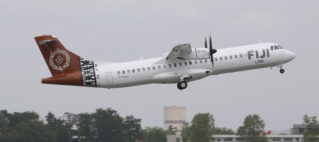
The biggest concern for tourism in this Budget is the proposed 5% Tourism Services Tax, to be applied from 1 September 2026 to hotels and tour operators with annual turnover above $2 million, with revenue directed to support Fiji Airways. We all recognise the airline’s vital role in Fiji’s connectivity, visitor arrivals, trade, employment and national brand, and we understand its exposure to fuel volatility, debt servicing, foreign exchange movements and global competition. Without reliable air access, the wider economy would suffer quickly. But this measure is too short-sighted. It places the burden on one sector already under pressure, erodes reinvestment capacity, and risks undermining the very resilience and competitiveness that Fiji needs. This is not an argument against Fiji Airways—it is an argument for fairness, transparency, and a properly designed national response. With a valid concern that while marginalising other businesses, there may be little real impact where it is expected and a longer term negative impact on the destination’s appeal.
Several other support measures have been outlined for the airline. The extension of the loss carry-forward period from 8 years to 15 years for operating international services and the extension of the moratorium on revised outdoor fees to July 2027, which is expected to provide relief of around $10 million annually. An additional $200 million guarantee is also under consideration. Those are significant measures that rightly reflect the strategic importance of the airline. Which is precisely the point. If Fiji Airways is a national strategic asset, then support for it must be treated as a national issue, not placed disproportionately on tourism operators through a sector-specific turnover tax.
A turnover tax is a blunt instrument applied whether a business is profitable or not. It does not care whether an operator is carrying COVID-era debt, managing thin margins, operating seasonally, facing labour shortages, paying higher wages, maintaining ageing infrastructure, absorbing utility costs or meeting the growing costs of compliance across tax, health, OHS, liquor, fire, environment and labour requirements. It certainly would not care if fuel prices went up again, the already recognised super El Nino season brought drastic weather with it, or some other reason wrought havoc on an industry that must consistently fight to stay competitive.
It also does not recognise the commercial structure of tourism. Many hotels and tour operators have already contracted rates, accepted deposits, confirmed group bookings and entered wholesale arrangements well beyond 1 September 2026 and 2027-2028 contracts have either just been signed or are on the verge of confirmation.
These are binding, commercial commitments and contracts.
Beyond the immediate price impact, the proposed tax risks damaging confidence in Fiji as a reliable destination for contracting and selling. International wholesalers invest heavily in marketing, digital campaigns, brochures, and forward-selling programmes, all of which depend on certainty that agreed pricing will hold for the contracted period. If new taxes can be imposed after contracts are signed, Fiji becomes harder to package, promote, and secure long-term marketing investment.
This undermines not only wholesalers and travel agents, but also resorts, tour operators, transport providers, and the many local businesses that rely on visitor spending.
Tourism operators cannot simply “absorb” the 5% Tourism Service Tax without consequences. A 5% tax on revenue on a business retaining 25% of its revenue as profit, translates to a 20% tax of its taxable income. Corporate income tax already sits at 25% meaning the business will be taxed 45% of its income. On another business that retains only 15% of its revenue as profit, the same 5% tax on turnover represents a 33% tax on profit, total corporate income tax on this business is 58%!! This is unheard of globally and unsustainable by any business, least alone those trying to grow in line with the governments ambition to add 4000 hotel rooms to the market.
That is where competitiveness becomes the next concern. With a 12.5 percent VAT in place, adding a 5 percent tourism-specific tax places a 17.5 percent tax burden on affected tourism services before the existing FJ$200 departure tax is even considered.
At the same time, Fiji is working hard to protect its value proposition against destinations such as Bali, Thailand and Vietnam, where pricing, air access, scale and product diversity are fierce competitive factors, as are their higher productivity, lower wage scales and significant access to locally produced and therefore cheaper fresh produce offerings.
Beyond the immediate impact, there are wider economic risks. Tourism is Fiji’s leading export, generating foreign exchange, jobs, and economic activity across communities.
Raising the sector’s cost base threatens to reduce demand, shorten visitor stays, and cut spending on dining, tours, transport, shopping, and local services. The fact that the tax is applied on turnover rather than profitability is especially problematic. Operators with high costs, debt obligations, seasonal exposure, and narrow margins will be required to pay regardless of their financial position. This is not a contribution tied to profitability—it is an added burden on the very revenue stream Fiji depends on most.
If Government proceeds despite the industry’s opposition, minimum safeguards are essential. Pre-existing contracted, deposited and paid bookings must be excluded.
The tax must not apply retrospectively. It must have clear administrative treatment to avoid cascading costs. It must be separately identified. There must be a legislated sunset clause of no longer than 12 months. Receipts must be ring-fenced, independently audited and publicly reported. And if tourism operators are being asked to contribute directly to the financial position of the airline, then they have asked that serious consideration should be given to a mechanism that allows those contributions to be converted into equity through a special purpose vehicle.
This is good governance. It recognises the airline’s importance, while insisting that extraordinary support must come with extraordinary clarity.
Tourism has carried Fiji through recovery. It continues to generate revenue, jobs, tax receipts, investment and global visibility. The National Budget acknowledged the need to protect the industry. Protection cannot mean praise in one paragraph, then a sector specific bludgeon in the next.
The better path is a national solution for a national carrier of critical importance to us all. If the objective is to raise revenue quickly for a national purpose, then a broader national mechanism would be more equitable than concentrating the cost on one sector. Fiji Airways serves the whole country. Its benefits extend across trade, freight, diaspora travel, medical travel, education, investment and national connectivity.
Tourism is a major beneficiary, yes, but not the only one.
We have said so before – support for Fiji Airways must be national, transparent, temporary, conditional and fair. We cannot be squeezing the oil out from just one wheel to fix the other proverbial, squeaky wheel.
Fantasha Lockington – CEO, FHTA (Published in the Fiji Times on 02 July 2026)

Fiji Hotel and Tourism Association
The Voice of the Industry