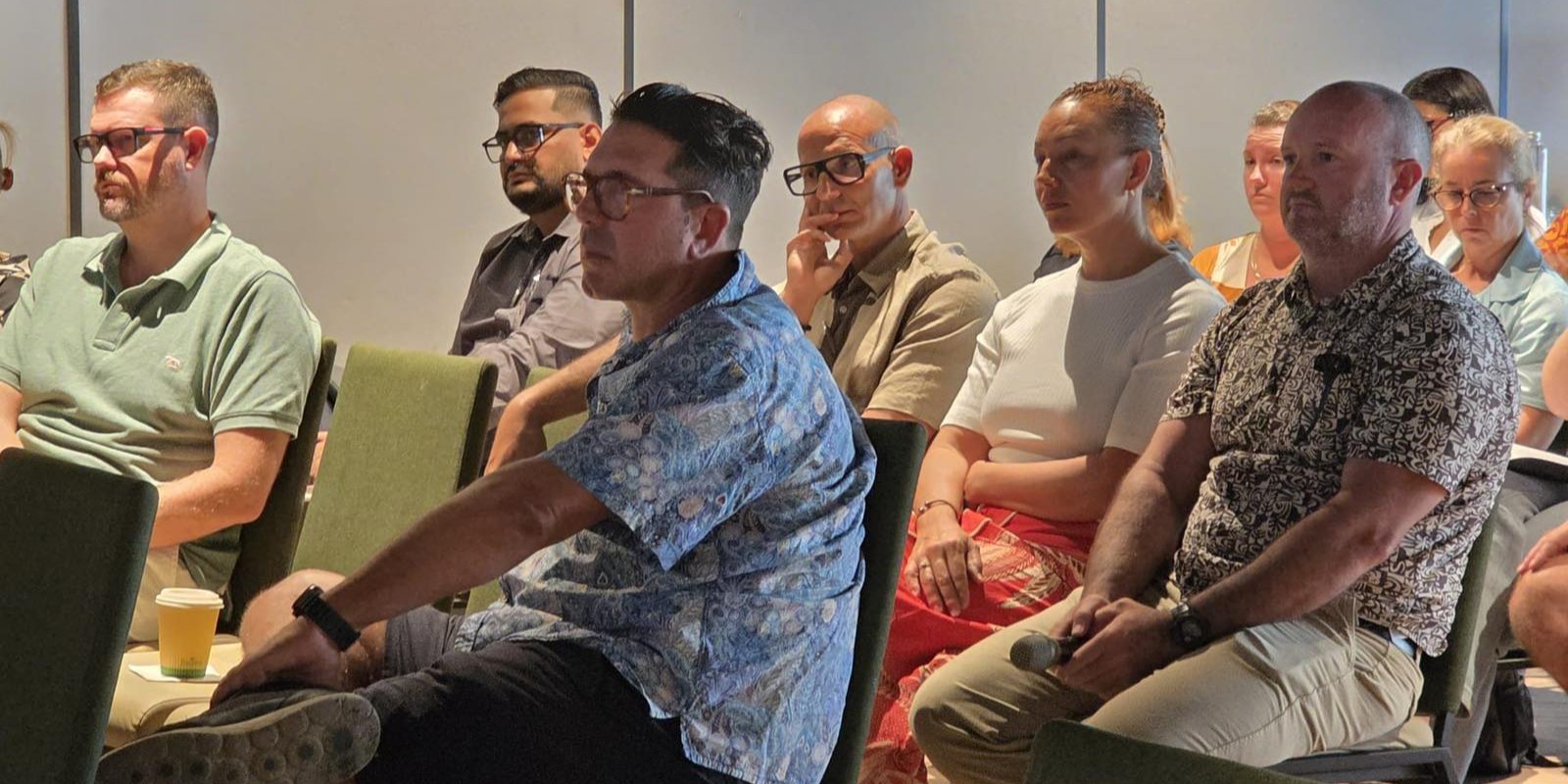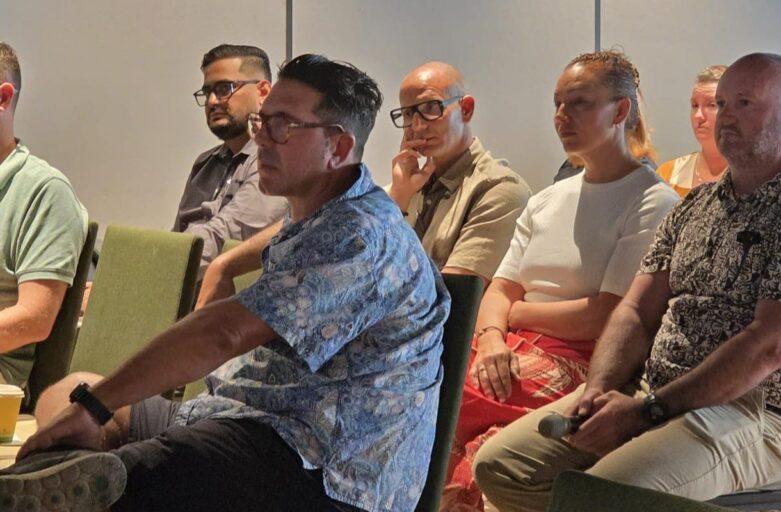
Fiji Hotel and Tourism Association, 23 July 2026 – Last week, the Parliamentary Standing Committee on Justice, Law and Human Rights convened a consultation on the Commercial Use of Marine Resources Bill 2025 (CUMA) through the Fiji Hotel & Tourism Association, commendably broadening tourism stakeholder input. It is uncommon for a parliamentary committee to directly engage a private sector association, despite many reforms significantly affecting the industry when it is excluded. This gesture warrants recognition, acknowledgement and some serious consideration.
Through FHTA, the industry has also been asked to contribute to several other reforms, including the Health Act, the Securities Act Review, the Liquor Act Review, the Yacht Charter Act, and the Fiji Ports Charges Review, among others. We have contributed to discussions, consultations and submissions on the Employment Relations Amendments Bill, the National Minimum Wage, the VAT Act Review, the VAT Monitoring System, the Tourism Act, the FNU Employer Levy, and make annual submissions on the National Budget.
Despite tourism’s broad economic impact, policymakers often overlook how legislative modernisation- designed primarily for public sector upgrades – often fails to keep pace with the industry’s rapid evolution. As a result, amendments frequently prove inconsequential or, worse, are misaligned with the diverse segments of this heavily relied-upon sector. Tourism has advanced in commercial strides, integrating global standards, digital transformation, and complex supply chains, yet reforms continue to lag. This disconnect risks undermining competitiveness, creating regulatory friction, and eroding confidence in one of Fiji’s most critical economic drivers.
The recent raft of consultations on legislative reviews has therefore been welcomed, despite the one on taxes slipping through the cracks. The CUMA Bill governs how businesses access and operate within Fiji’s marine areas, and for a significant share of our tourism industry, that access is not a peripheral consideration. It is the foundation most operations are built on. A dive operation, a live-aboard charter, a marine-based excursion company, an island resort dependent on boat transfers and reef access- all of these operate at the direct intersection of commercial activity and marine tenure that this Bill is designed to regulate.
Given that reality, it has always been clear to us from the outset that this consultation must be as wide as possible given its scope. This legislation will apply regardless of status, and an issue of this magnitude warrants an industry-wide response rather than a narrower one shaped only around our own membership base and the turnout reflected that understanding and shared concern. Operators from across the sector, large and small, attended and contributed, and the discussion was stronger for it.
What emerged from that session was a genuinely useful exchange. Committee members heard directly from people whose livelihoods depend on the outcome of this legislation, not through a written submission or a summarised position paper, but in person, in their own words. Some contributions were technical, addressing the practical mechanics of licensing, access arrangements and enforcement. Others were more personal, reflecting the extent to which many of our operators have built their working lives, and in some cases their family histories, around a relationship with Fiji’s marine environment or relationships with their communities. Both forms of input have value, and we hope the committee left that room with a clearer understanding of what this Bill means in practice, beyond its language on paper.
I want to address, with appropriate care, the sensitivity that sits underneath this entire conversation. The Commercial Use of Marine Resources Bill does not exist in isolation. It intersects directly with questions of customary marine tenure and indigenous rights that long precede tourism as an industry in this country, and indeed long precede the modern Fijian state itself. iTaukei communities hold legitimate and paramount rights over the resources within their qoliqoli, and any legislation touching commercial use of those waters must be built on that foundation as a starting principle, not as a qualification added afterwards. This is not a matter of legal formality. It reflects a relationship with land and sea that runs deeper than commercial interest, and it deserves to be treated with the weight that history and custom give it. This is not about catering to any single qoliqoli seeking to regain lost ground. It is about safeguarding a collective heritage and ensuring that legislation reflects the depth of customary rights and responsibilities. Any framework for commercial use must honour that foundation, or risk undermining both indigenous authority and national cohesion.
Tourism’s engagement with this Bill is not, and should not be read as a challenge to that principle. What our industry brought to the table last week was a request to be included meaningfully in shaping how commercial access functions in practice, recognising that tourism is one of the sectors most materially affected by the eventual shape of this legislation. We are not seeking preferential treatment, and we are conscious of how easily that impression could form if this issue is not communicated carefully. What we are seeking is genuine participation in a process that will determine how a significant part of our industry will operate for years to come. Tourism remains the backbone of Fiji’s economy, supporting employment across every division of this country and generating the foreign exchange earnings that underpin much of our national output. That is not asserted as leverage. It is simply the operating reality within which this legislation will be implemented, and it is precisely why we approach a matter this sensitive with restraint rather than assertion.
This brings me to the question that, in my view, matters more than the consultation session itself: what happens next? Being consulted and being heard are not the same thing, and any organisation that has spent time engaging with government processes in this country will recognise the distinction. A consultation can shape an outcome meaningfully, or it can function as a procedural step that precedes a decision already largely settled. I do not know at this stage which of those descriptions will eventually apply here. I hope, sincerely, that it is the former. But hope is not a substitute for evidence, and we will only know once we see how the concerns raised last week are reflected, or not reflected, in the Bill’s final form.
There is a comparison worth drawing here briefly, because it illustrates a pattern our industry has encountered before. For some years now, the narrative around Fiji Airways and tourism has tended to run in one direction, with the airline and the Ministry of Tourism regularly emphasising that tourism depends on Fiji Airways. That is true, and we do not dispute it. But it is an incomplete picture. Tourism, if required, retains the option of working with other carriers to bring visitors into this country. Fiji Airways has no comparable alternative to replace the passenger volume that tourism delivers.
The dependency between these two sectors runs in both directions, and arguably runs more heavily in one than the other. I raise this not to reopen that particular debate in this article, but because it reflects a broader lesson our industry has learned over time.
Being told that one’s contribution is valued is not the same as being treated, in practice, as a genuine partner in decision-making. That distinction applies just as directly to the marine resources conversation now underway.
Further consultations on this Bill are scheduled over the coming weeks, and I hope they proceed in the same spirit as last week’s session – as a genuine exchange of views rather than a formality conducted for the record. I also raise this with full awareness of the political calendar we are currently operating within. This is an election year, and election years in Fiji, as elsewhere, tend to bring particular pressures to bear on policy processes. Positions are sometimes shaped less by workability and more by public reception, perception and even heightened emotion.
Legislation can be accelerated, delayed or reshaped in ways driven by short-term political considerations rather than long-term practical outcomes for the people who must operate within it once it is law. Sensitive legislation of this nature, touching both customary rights and commercial interests simultaneously, is particularly susceptible to that kind of pressure, and the consequences of getting it wrong will be felt long after this election cycle has passed. We the people – we the industry – will still be here long after politicians have moved on and precious agendas passed.
Our position, as we move into these further consultations, remains straightforward. We are genuinely grateful for the opportunity to be heard, and we do not underestimate the significance of a parliamentary committee choosing to seek tourism’s perspective directly. We extended that opportunity across the industry because the industry as a whole holds a stake in this outcome, and that approach will continue through every subsequent session. We will keep bringing operators into these rooms, keep making the case for an industry that contributes substantially to this nation’s wellbeing, and we will continue to do so while fully respecting that this legislation rests on rights and traditions that predate our industry entirely.
What we hope for, as this Bill moves towards finalisation, is straightforward to state even if it is harder to guarantee. That the views expressed in these consultation rooms are genuinely reflected in the legislation that ultimately emerges from them. Whether that happens sits beyond our control. Showing up, however, and ensuring the whole industry has a voice in the process, remains entirely within it, and that is precisely what we intend to keep doing.
Fantasha Lockington – CEO, FHTA (Published in the Fiji Times on 23 July 2026)

Fiji Hotel and Tourism Association
The Voice of the Industry